
Cabinet painting changes the color and finish of your existing doors and boxes with a fresh coat. Refinishing strips the old finish back to bare wood, then re-stains or re-coats it. Refacing keeps your cabinet boxes in place and replaces the doors, drawer fronts, and visible veneer.
In rough terms, painting runs $1,500 to $5,000 for a typical kitchen, refinishing lands between $2,000 and $7,000, and refacing usually starts around $7,000 and climbs past $20,000 depending on materials. A full cabinet replacement costs $15,000 to $35,000 and up.
Which one’s right for your kitchen depends almost entirely on the condition of what’s already there and the look you’re after.
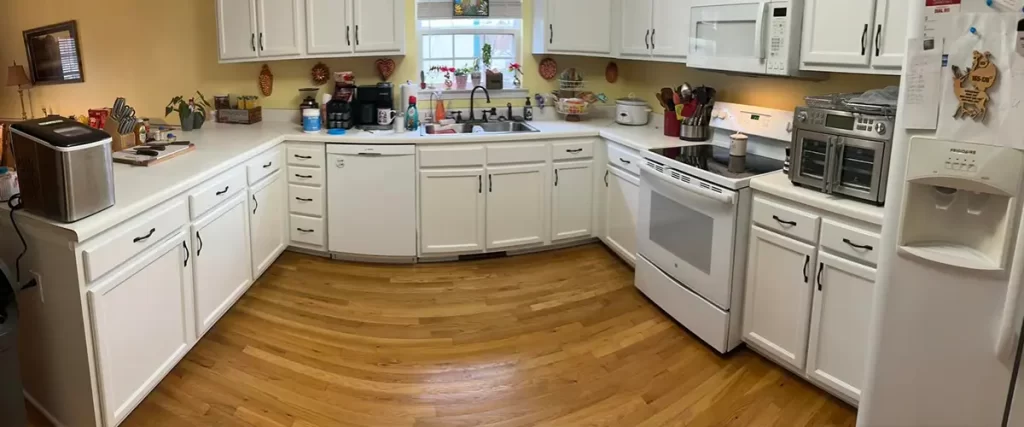
The Three Options at a Glance
| Painting | Refinishing | Refacing | |
| What’s involved | New paint on existing doors and boxes | Stripping and re-staining or re-coating wood | New doors, drawer fronts, and veneer over existing boxes |
| Typical cost | $1,500 to $5,000 | $2,000 to $7,000 | $7,000 to $20,000+ |
| Timeline | 3 to 5 days | 5 to 10 days | 1 to 2 weeks |
| Best for | Solid cabinets, color change | Wood cabinets in good shape, natural finish | Outdated style, structurally sound boxes |
| Works on thermofoil? | Sometimes | Rarely | Yes |
| Lifespan | 7 to 10 years | 10 to 15 years | 15 to 20 years |
When Cabinet Painting Is the Right Move
Painting is the go-to when your existing cabinetry is structurally solid but visually tired. The boxes hold up, the doors close the way they should, and the only thing dragging the kitchen down is the color or finish that hasn’t aged well.
It’s especially well-suited to:
- Solid wood cabinets that have lost their appeal but still function perfectly
- Maple, oak, or birch cabinets where you want a totally different look without ripping anything out
- Updating from honey oak to a modern white, deep navy, or dark green without touching the layout
- Bathroom cabinets that just need a refresh
- Kitchens on a tighter budget where the layout already works
The catch is that not all cabinets take paint well. Laminate and thermofoil need specific primers and prep, and badly damaged surfaces aren’t worth the labor cost of trying to save them. Surface preparation is honestly more important than the paint itself. A bad prep job will peel inside a year, no matter how good the topcoat is.
For a closer look at which finishes actually hold up to daily kitchen use, our breakdown of the best paint options for kitchen cabinets covers what works and what fails.
When Refinishing Earns Its Place
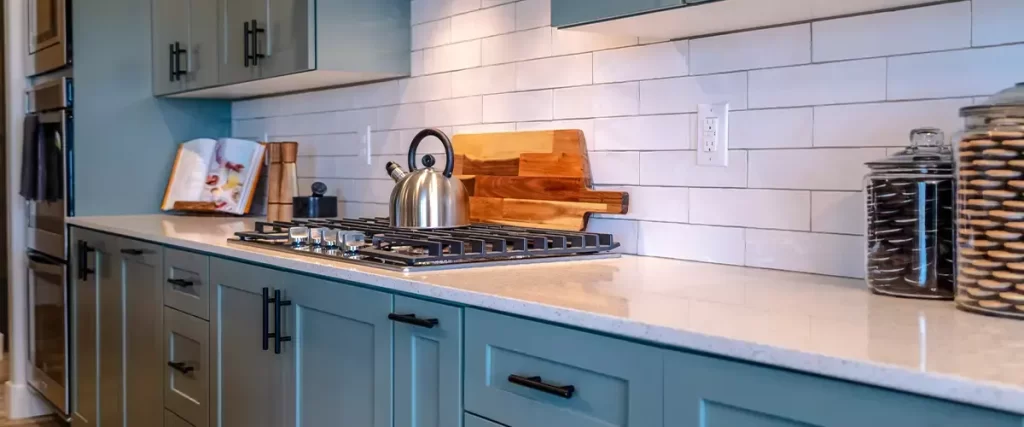
Refinishing is the option you pick when you love the wood underneath and want to bring it back to life. The original finish gets stripped off, the wood is sanded back to bare, and a new stain or clear coat goes on top. You end up with the same cabinets, just looking the way they did when they were new (or in a different stain entirely).
This makes sense for:
- Solid wood cabinets with visible grain that you want to keep visible
- Cabinets in good shape structurally but with a yellowed or worn clear coat
- Anyone who likes the natural wood look and just wants it refreshed
- Updating from a dated stain to a more current tone, like a warm walnut or a lighter natural finish
Refinishing only works on solid wood and certain quality veneers. Particleboard cabinets, MDF, thermofoil, and laminate aren’t candidates because there’s no wood to expose underneath. The process also takes longer than painting and involves more dust and sanding, which means more disruption to the kitchen during the work.
When Refacing Makes the Most Sense
Refacing keeps the existing cabinet boxes (the part bolted to the wall) and replaces everything you actually see. New doors, new drawer fronts, new veneer on the exposed cabinet sides, often new hinges and pulls. The kitchen looks completely different at the end, but the layout, footprint, and storage stay exactly the same.
It’s the right call when:
- Your cabinet boxes are structurally sound but the doors are warped, damaged, or just dated
- You want a different door style entirely (flat panel, shaker, raised panel) without a full rebuild
- The layout already works and you don’t want to redo plumbing, electrical, or tile
- You’re working with thermofoil or laminate boxes where painting and refinishing won’t deliver
- You want soft-close hinges, new hardware, and modern functionality without a full gut
Refacing costs more than painting or refinishing because new doors and drawer fronts aren’t cheap. It also delivers the most dramatic transformation short of replacement, often for half the price of new cabinets.
When You Should Just Replace Them Instead
There’s a point where trying to save cabinets stops making financial sense. Warped boxes, water damage, broken frames, soft-close mechanisms that have failed across the board, layouts that genuinely don’t work for how you cook. At that point, refacing or refinishing just delays an inevitable replacement and adds cost on top.
Pre-1978 homes carry an extra consideration. According to the EPA’s Renovation, Repair and Painting (RRP) Rule for pre-1978 homes, any work that disturbs more than six square feet of interior painted surface in a room with potential lead paint requires a lead-safe certified contractor. That regulation applies to cabinet refinishing and painting in older homes, and it’s the right thing to take seriously, especially if children live in the house.
When the cabinets themselves are simply at the end of their useful life, a full replacement opens up the option to rework the layout, add storage solutions, and pick exactly the cabinetry that fits your kitchen long-term. It’s a bigger project, but sometimes it’s the only one that actually solves the problem.
FAQ
How do I know if my cabinets are good candidates for painting?
Pull open a door, look at the frame, and lean on it. If the box feels solid, the doors close cleanly, and the surfaces are intact, painting is on the table. Solid wood, MDF with intact veneer, and some laminates all paint well with the right prep. If anything feels loose, warped, or water-damaged, you’re heading toward refacing or replacement territory.
Can I paint cabinets myself instead of hiring someone?
Technically yes. Practically, the prep work is brutal and the difference between a professional finish and a DIY finish shows up within months. Spray equipment, proper degreasing, sanding between coats, and the right primer-to-topcoat sequence are where most DIY projects fall short. The before-and-after of a professionally sprayed cabinet job is usually what convinces homeowners to hire it out.
Does any of this actually add resale value?
Yes, when it’s done well. Updated cabinets are one of the highest-impact visual changes in a home, and buyers respond to them. Painting offers the best ROI on a tight budget. Refacing delivers the biggest visual transformation per dollar spent. Full replacement returns the most resale value but only if the rest of the kitchen warrants the investment.
Hand It Off and Get the Kitchen You Actually Want
Working out which option fits your kitchen, sourcing the right products, prepping every surface, and spraying for a factory-quality finish is a lot to take on between work and family. Hiring it out usually costs less than people expect and saves more weekends than any DIY project promises to.
We handle cabinet painting, refinishing, and full interior painting projects across the Nashville area. Call us at (615) 673-5773 or message us here for a real quote on your kitchen.