Painting cabinets sounds straightforward until you’re halfway through and realize the paint isn’t drying right, brush strokes won’t level out, and your kitchen looks worse than when you started.
The difference between a paint job that lasts and one that chips by next month comes down to using the right paint, proper prep, and realistic expectations about what cabinet doors can handle.
If you’ve ever wondered why professional painters charge what they do for painting kitchen cabinets, it’s because getting a factory smooth finish on wood cabinets is harder than it looks.
New Direction Painting has painted kitchen and bathroom cabinets across Nashville and Williamson County for 12 years. Here’s what we actually use, what we recommend at different budget points, and why the top paint brands changes depending on your specific cabinets.
Let’s break down what makes the best cabinet paint, which brands deliver a durable finish, and when to just call someone who knows what they’re doing.
Why Kitchen Cabinet Paint Is Different
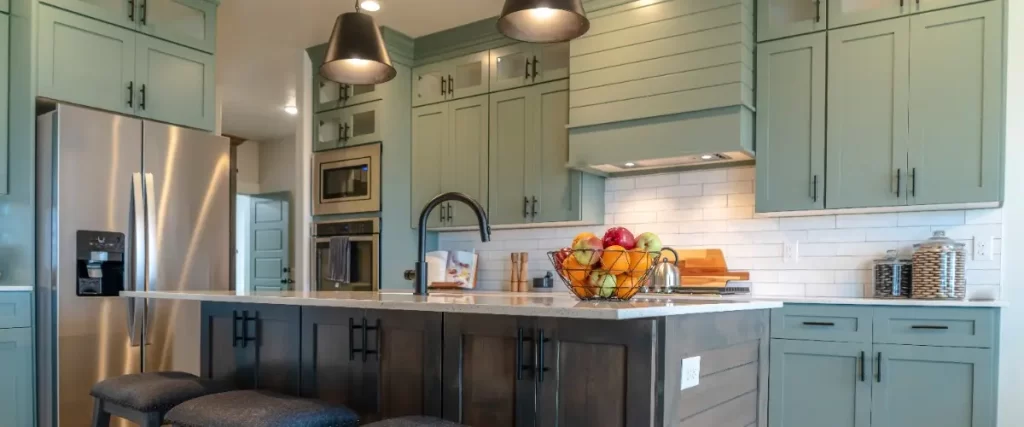
Kitchen cabinets take more abuse than any other painted surface in your home. Doors swing open and shut all day. Grease settles on flat surfaces. Kids leave fingerprints. You’re constantly wiping things down.
Wall paint can’t handle that. You need paint for cabinets that:
- Dries hard enough to resist scratches and chips
- Levels itself to minimize brush marks
- Sticks to previously painted or glossy surfaces
- Handles moisture without peeling
- Cleans without losing its sheen
That’s why slapping a fresh coat of latex paint meant for walls rarely works. Cabinet paints are formulated differently, and it makes all the difference.
Best Paint for Cabinets by Use Case
| Use Case | Best Paint Type | Why It Works |
|---|---|---|
| DIY / Beginner | Acrylic (water-based latex) | Easy to apply, low odor, fast drying |
| Professional finish | Urethane alkyd enamel | Smooth, factory-like finish + high durability |
| Budget project | Standard latex (with primer) | Affordable but shorter lifespan |
| High-moisture areas (kitchen/bath) | Alkyd or hybrid enamel | Strong resistance to moisture, grease, and wear |
Types of Cabinet Paint (And What Each Does Best)
Not all paint for kitchen cabinets is created equal. Here’s what you need to know about each type.
Water-Based Paint (Latex Paint)
Modern water-based paints have come a long way. Hybrid paints combine the convenience of latex with improved durability, making them a solid choice for painting kitchen cabinets.
Pros:
- Dries quickly
- Low volatile organic compounds
- Cleans up with water
- Less odor than oil-based paint
Cons:
- Needs excellent prep and the best primer to stick to glossy cabinet boxes
- Not quite as durable as oil paints
Best for: DIYers on a tight budget who want faster drying times and easier cleanup.
Oil-Based Paint
Traditional oil paint used to be the gold standard for cabinet doors. It creates a hard, durable finish that handles scrubbing better than most latex paint options.
Pros:
- Extremely hard finish
- Self-levels beautifully to reduce brush strokes
- Long-lasting durability
Cons:
- Takes days for the paint to dry fully
- High volatile organic compounds and strong odor
- Can yellow over time, especially with white paint
- Requires mineral spirits for cleanup
Best for: Those who want maximum durability and don’t mind the wait or smell.
Waterborne Alkyd & Urethane Enamels (What Pros Use)
This is what professional painters use for the best kitchen cabinet jobs. These paints level out and cure hard like oil paint, but they clean up with water and yellow far less than traditional oil paint.
Top products:
- Benjamin Moore Advance – Flows like oil-based paints, cleans up with water, creates a smooth finish with minimal brush marks
- Sherwin-Williams Emerald Urethane Trim Enamel – Designed specifically as cabinet paint, resists yellowing, delivers that factory smooth finish
- Sherwin-Williams ProClassic – Another alkyd paint option with excellent adhesion to existing cabinets
Pros:
- Self-levels for a smooth surface
- Durable finish that rivals traditional oil paint
- Doesn’t yellow like old paint formulas
- Water cleanup
Cons:
- More expensive than standard latex paint
- Slower drying than water-based paint
- Takes up to a week to fully cure
Best for: This is the best paint for cabinets if you want professional-level results.
Chalk Paint
Annie Sloan chalk paint became popular for its ability to stick to previously painted surfaces without much sanding. It gives a matte, soft look that works for farmhouse kitchens.
Pros:
- Sticks to old paint without extensive prep
- Great for a rustic aesthetic
- Easy to distress for a vintage look
Cons:
- Needs a protective topcoat (wax or sealer) to survive kitchen use
- Not as durable as other cabinet paints
- Matte finish shows fingerprints easily
Best for: Decorative projects, not high-traffic kitchen cabinets.
Milk Paint
Milk paint is a natural, low-VOC option that works beautifully on raw wood. It gives a soft, authentic finish but isn’t built for the demands of painting cabinets in a busy kitchen.
Best for: Furniture pieces or lightly used spaces, not kitchen cabinet paint jobs.
How Long Does Cabinet Paint Actually Last?
| Paint Type | Expected Lifespan |
|---|---|
| Standard latex | 2–5 years |
| Acrylic (higher-end water-based) | 3–7 years |
| Alkyd / oil-based | 5–10+ years |
| Urethane / hybrid enamel | 7–10+ years |
Best Paint Sheen for Cabinets
Paint sheen matters almost as much as paint color when painting kitchen cabinets.
- Satin Finish / Satin Sheen: Soft glow, hides minor imperfections, wipes clean easily. A popular choice for cabinet doors.
- Semi-Gloss Finish: More reflective, repels moisture better, stands up to constant cleaning. Semi-gloss finishes are durable but show surface flaws more than satin.
- High-Gloss: Mirror-like shine, modern look, but highlights every imperfection in wood grain and flat surfaces.
Professional painters typically recommend satin finish or semi-gloss for the best balance of durability and appearance.
Skip flat finishes; they don’t clean well enough for kitchen cabinets.
How to Get a Factory Smooth Finish (The Part Most People Mess Up)
Here’s the truth: even the best paint for cabinets won’t save a bad prep job.
Step 1: Clean Thoroughly
Grease and grime prevent adhesion. Use a degreaser, scrub every surface, rinse, and let dry completely. Skip this, and your paint job fails, no matter what paint brand you use.
Step 2: Sand the Surface
Lightly sand previously painted cabinets with a sanding block (120-150 grit) to rough up the surface. You’re not stripping to raw wood, just removing the sheen so the best primer can grip. Wipe away dust with a tack cloth.
Step 3: Prime Properly
The best primer seals wood surfaces, blocks stains, and gives your paint something to bond to. Use a bonding primer designed for glossy or existing cabinets. Don’t skip this step.
Step 4: Choose Your Application Method
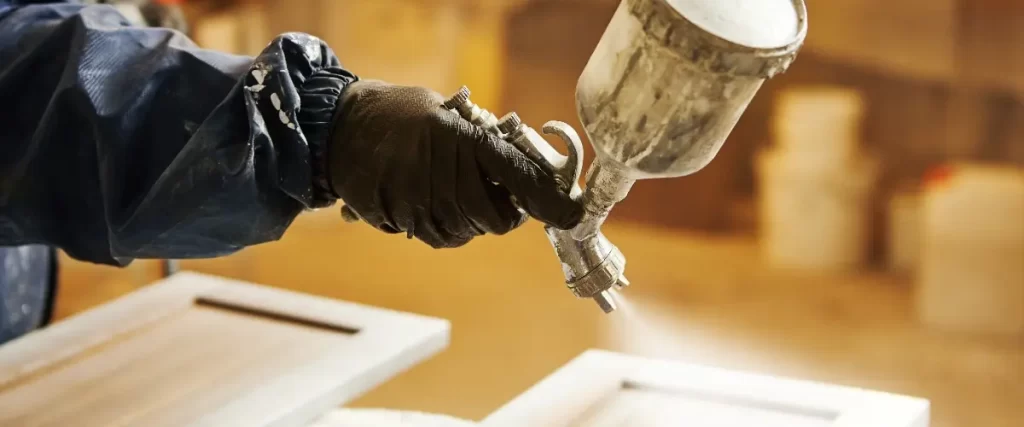
- Paint Sprayer: Delivers the smoothest finish with no brush marks or brush strokes. The best paint sprayer can make even budget paint look professional. Downside: requires practice, proper ventilation, and masking your entire kitchen.
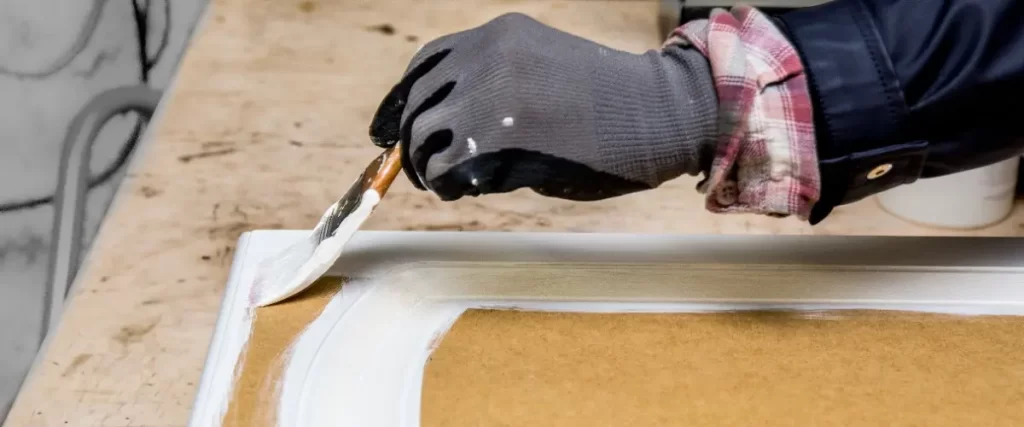
- Foam Roller: Works well on flat surfaces like cabinet boxes and large cabinet doors. Creates a smooth surface with minimal texture. Use a high-quality foam roller—cheap ones leave bubbles.
- High-Quality Brush: Necessary for detailed areas, edges, and trim paint work. Cheap brushes leave visible brush strokes. Invest in a good synthetic brush designed for your paint type (water-based paint or oil-based paint).
Step 5: Apply Multiple Coats
Two to three thin coats beat one thick coat every time. Thick paint sags and shows brush marks. Thin coats level themselves and cure properly.
Let each coat dry completely before applying the next. Lightly sand between coats (220 grit) for the smoothest finish.
Step 6: Let the Final Coat Cure
Just because paint appears dry doesn’t mean it’s ready for use. Alkyd paint and oil paints can take up to a week to fully harden. Reattach cabinet doors too soon, and they’ll stick or chip. Here’s how we paint cabinets, step by step.
Best Paint for Cabinets: Specific Recommendations
If you want names that professional painters actually use, here’s a recommendation you can follow.
Benjamin Moore Advance Cabinet Paint
Benjamin Moore Advance (formerly sold as Advance Waterborne Interior Alkyd) is the product most professional painters reach for on cabinet work. It’s a waterborne alkyd — meaning it uses a water carrier while incorporating alkyd resin as the binder — which gives it properties closer to oil-based paint than standard latex:
- Self-leveling formula: Brush and roller marks flatten out as the paint cures, producing a smooth, near-spray finish without actually spraying
- Hard cure: Advance cures significantly harder than standard interior latex, which is essential for surfaces that get daily hand contact and frequent cleaning
- Slow open time: The extended wet edge time gives the paint longer to level before it sets, which is what produces the smooth finish
- Low VOC: Water-based cleanup despite the alkyd performance
Specs:
- Finish available: Satin, semi-gloss, high-gloss
- Coverage: approximately 350 sq ft per gallon
- Dry time: touch-dry in 1-2 hours; recoat after 16 hours; full cure 30 days
- Our recommended finish for cabinets: Semi-gloss
One honest caveat about Advance: The extended open time that makes it level well also means it’s slower between coats than standard latex. Budget a minimum of 16 hours between coats — rushing this produces adhesion problems between layers.
Color note: Benjamin Moore Advance is available in any BM color. Popular Nashville cabinet colors we use include Chantilly Lace (OC-65) for white cabinets, Hale Navy (HC-154) for navy islands, and Onyx (2133-10) for black cabinets.
Sherwin-Williams Emerald Urethane Trim Enamel
SW Emerald Urethane is the Sherwin-Williams product most comparable to BM Advance for cabinet and trim work. The urethane modification adds hardness and chemical resistance beyond what standard Emerald Interior provides, making it appropriate for surfaces that take daily wear.
- Harder finish than standard Emerald: The urethane binder produces a denser, more impact-resistant cured film
- Yellowing resistance: The urethane formulation resists the yellowing over time that oil-based alkyds can develop on white and light-colored cabinets
- Water cleanup: Despite the urethane component, it’s water-based
Best use case for SW Emerald Urethane: Projects where the rest of the home is using Sherwin-Williams products and brand consistency is a consideration, or where a customer specifically prefers the SW line.
Sherwin-Williams ProClassic Interior Alkyd
ProClassic has been the professional painter’s go-to SW cabinet product for longer than Emerald Urethane has existed, and it’s still the product many experienced painters prefer for cabinet work specifically. It comes in two versions with meaningfully different characteristics:
ProClassic Waterborne Alkyd Enamel – water-based cleanup, 4-hour recoat time, extremely hard cure. The most commonly used version today due to lower VOC content and practical site logistics. Levels well, produces a dense film that holds up to daily cabinet use, and doesn’t yellow on white or light colors over time.
ProClassic Interior Alkyd (oil-based) – requires mineral spirits for cleanup, 16-hour recoat time, and produces the hardest cured film of any paint in the SW line for cabinet applications. The tradeoff is yellowing on whites and light colors over time — less of a concern on dark cabinet colors but a real consideration on any white or cream kitchen. Some painters still prefer this version specifically for dark or saturated cabinet colors where maximum hardness outweighs the yellowing concern.
Specs (Waterborne version):
| Type | Waterborne alkyd |
| Finish options | Satin, semi-gloss, gloss |
| Coverage | ~400 sq ft/gal |
| Recoat time | 4 hours |
| Full cure | 30 days |
| Price | ~$60–$75/gal |
ProClassic typically runs slightly lower than Emerald Urethane in price, making it the better value option within the SW line when Emerald Urethane’s specific urethane-hardness characteristics aren’t the deciding factor.
For other comparable paints, look for products specifically labeled as cabinet paints or urethane trim enamel.
Common Mistakes When Painting Cabinets
Even high-quality paint fails if you:
- Skip cleaning—grease prevents adhesion
- Use wall paint instead of the paint-cabinets formula
- Rush between coats before paint dries
- Paint in high humidity—slows drying and affects the smooth finish
- Don’t sand between coats—light sanding creates a smooth surface
- Reassemble too soon—doors stick or chip
- Ignore wood grain direction while brushing
- Use cheap brushes or foam rollers that leave texture
Each shortcut shows up in the finished product.
When You Should NOT Paint Cabinets
Painting isn’t always the right solution.
Avoid painting if:
- Cabinets are structurally damaged or warped
- Laminate is peeling badly
- You want a factory-level finish without spray equipment
- The cost of labor approaches replacement/refacing
In these cases, refacing or replacing may deliver better long-term value. If painting isn’t the right fit, compare painting vs refinishing vs refacing.
How Many Coats of Paint Do You Need?
Most cabinet paint jobs require:
- One coat of the best primer
- Two to three coats of paint (depending on paint color and coverage)
- Light sanding with a tack cloth between coats
Dark paint color over white paint may need an extra coat. Raw wood or wood cabinets with visible wood grain may need additional primer.
Can You Paint Cabinets on a Tight Budget?
Yes, but it takes more effort.
Choose a quality water-based paint, not the cheapest option, but not $100/gallon either. Pair it with a good bonding primer. Sand thoroughly. Apply multiple coats. Use a foam roller on flat surfaces and a quality brush for details.
A fresh coat of white paint or neutral paint color can transform older cabinet doors without breaking the bank. You just have to put in the prep work.
Brush and Roll Painting vs. Spray Painting Kitchen Cabinets
Brushing and rolling
- More control
- Works in occupied kitchens
- Takes longer
- Can leave slight brush strokes, even with the best paint
Spray painting
- Fastest method
- Creates the smoothest, most professional finish
- Requires removing cabinet doors and boxes from your entire kitchen
- Needs proper ventilation and masking
- The best paint sprayer makes a huge difference in results
Professional painters often use spray painting for the cleanest factory smooth finish, but brushing and rolling can still deliver excellent results with the right technique.
When to Call Professional Painters
Painting cabinets is one of those projects that looks easier than it is.
The prep alone takes hours. You need space to lay out all the cabinet doors. You need patience to wait between coats. And if you mess up, you’re stuck looking at it every day.
Professional painters bring:
- Experience with wood surfaces and previously painted cabinets
- The right tools (paint sprayer, quality brushes, proper ventilation)
- Knowledge of which paint brand, primer, and techniques deliver a durable finish
- Speed—finishing in days what might take you weeks
The cost is higher upfront, but you skip the trial-and-error phase and get a paint finish that actually lasts.
Bottom Line: Best Paint for Kitchen Cabinets
The best kitchen cabinet paint is the one you’ll prep for correctly.
- For professional results: Benjamin Moore Advance or Sherwin-Williams Emerald Urethane
- For DIY on a budget: Quality water-based paint with excellent primer and thorough sanding
- For farmhouse look: Annie Sloan chalk paint with protective topcoat
- For maximum durability: Oil-based paint (if you can handle the smell and wait)
Most failed paint jobs come from skipping prep, rushing between coats, or using the wrong paint for cabinets. If you’re committed to doing it right: cleaning, sanding, priming, multiple coats, and patience, you can get a smooth finish that looks professional.
If you’re not sure, hire it out.
Let Professionals Handle Your Cabinet Paint Job
Cabinet painting is tedious, messy, and unforgiving. If you’d rather skip the learning curve, New Direction Painting handles everything, from prepping existing cabinets to delivering a factory-smooth finish that lasts. Let our Franklin cabinet painting specialists handle the hard part.
We use the best paint brands, proper techniques, and we don’t cut corners on prep work. Whether you want a fresh white paint update or a complete paint color transformation, we’ll make your wood cabinets look brand new.
Call (615) 673-5773 or message us here for a quote. We’ll give your entire kitchen a professional finish without you touching a brush.