
For commercial property owners, maintenance projects come with more than just aesthetic decisions, they carry tax implications too. One of the most common questions we hear from clients is: “Is painting a capital improvement?”
It sounds straightforward, but the answer depends on context: the type of property, the scope of the work, and how the Internal Revenue Service (IRS) defines a capital improvement versus a repair expense.
Let’s walk through what counts as a capital improvement, how painting fits into that picture, and what it means for your tax planning and bottom line.
What Is a Capital Improvement?
A capital improvement is a permanent upgrade that adds value to a property, extends its useful life, or adapts it for a new purpose. According to the Internal Revenue Service, capital improvements generally involve work that enhances a building’s structure or major systems.
Examples include:
- Installing a new roof or replacing an entire roof
- Adding a new HVAC system
- Upgrading energy efficient windows
- Replacing major property components like plumbing or electrical systems
- Building an addition or new structure
These are classified as capital expenditures, and their total cost is not deducted all at once. Instead, property owners recover the cost over time through straight-line depreciation on their tax return.
In contrast, repair expenses are smaller, routine actions that keep a property in efficient operating condition, such as fixing a broken window, resealing a parking lot, or repainting worn trim. These are typically deductible repair expenses that can be written off in the same tax year.
Painting as Maintenance vs. Capital Improvement
So where does painting fit?
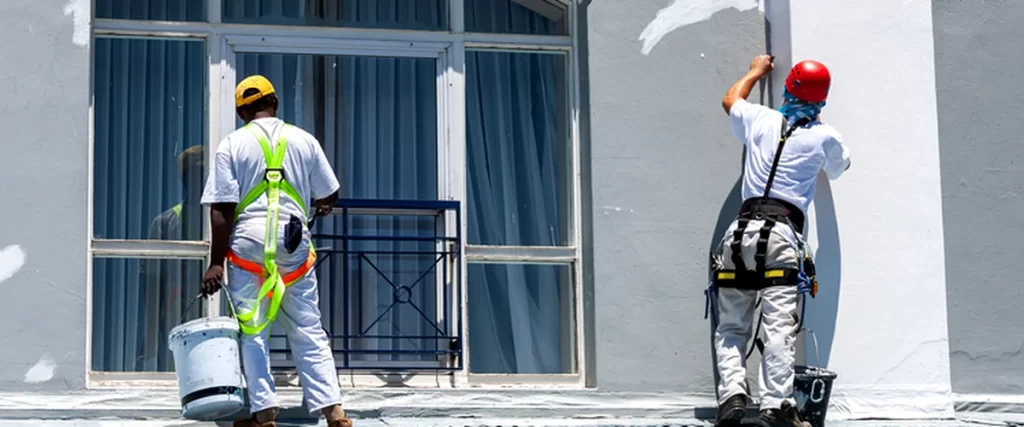
Painting costs can fall into either category, depending on the circumstances. Most often, the IRS considers painting to be maintenance, something done to maintain appearance and protect surfaces rather than to significantly increase the property’s value or extend its life.
For example:
- Repainting an existing office building every few years to refresh its look is generally considered a maintenance expense.
- Painting a newly constructed commercial building for the first time is part of the capital improvement project and becomes part of the building’s depreciable cost.
- Painting as part of a larger renovation, like adding new walls, installing new drywall, or completing a full remodel, may also qualify as a capital expense.
It comes down to intent and scope. If the painting is part of a major renovation or larger improvement, it can be capitalized. If it’s simply routine maintenance, it’s expensed immediately.
IRS Guidelines on Capitalization
The IRS has clear guidelines on how to handle property improvements through the IRS capitalization rules under the Tangible Property Regulations. These rules help determine which expenses incurred must be capitalized and which can be deducted.
Generally, an expenditure is considered a capital improvement if it:
- Improves the property by fixing a defect, expanding capacity, or increasing strength or quality.
- Restores the property after it deteriorates or replaces a major component or structural part.
- Adapts the property for a new or different use.
Routine activities like repainting or resealing surfaces typically fall under the routine maintenance safe harbor, meaning they are deductible in the year incurred.
However, if the painting is done as part of a project that significantly extends the property’s life or changes its function, it’s treated as a capital improvement.
Examples of Painting Scenarios
Here are a few common examples property owners encounter:
1. Routine Repainting of an Office Building
You repaint your commercial building every five years to keep it looking clean and professional. No new materials, no additional structure, just a fresh coat of paint.
✅ Tax Treatment: Deductible as a maintenance expense in the same tax year.
2. Painting After a Major Renovation
Your property undergoes a full interior remodel, including new drywall, upgraded lighting, and an expanded bathroom layout. Painting finishes the renovation.
✅ Tax Treatment: Considered part of a capital improvement project since it’s integrated into a larger renovation.
3. Painting a Newly Built Property
A developer constructs a new commercial property and paints the exterior as part of the build.
✅ Tax Treatment: Capitalized as part of the property’s original cost basis and depreciated over time.
4. Touch-Up Work Between Tenants
A rental property owner repaints between leases to maintain a professional look.
✅ Tax Treatment: Usually treated as regular maintenance, deductible immediately.
5. Painting as Part of Energy Efficiency Upgrades
If painting is combined with installing reflective or energy-efficient coatings that reduce heat absorption and improve energy performance, consult your tax advisor. It may qualify as a capital project with additional tax benefits.

Why It Matters for Property Owners
The distinction between a capital improvement and a repair expense affects your tax bill and long-term financial planning.
- Repair expenses provide immediate tax relief, lowering your taxable income in the same year.
- Capital improvements are depreciated over time, spreading the deduction across the improvement’s useful life.
For commercial properties, capitalized costs usually depreciate over 39 years under the straight-line depreciation method. That’s a long horizon, but it aligns with the asset’s life.
Knowing the difference ensures accurate reporting on your applicable financial statement and avoids issues with the IRS.
Special Considerations for Commercial Property Owners
1. The Routine Maintenance Safe Harbor
The IRS allows property owners to deduct certain routine maintenance activities immediately. To qualify, the work must:
- Keep the property in efficient operating condition.
- Be expected more than once during the property’s class life (such as repainting every few years).
Under this rule, painting is usually deductible when done regularly.
2. The De Minimis Safe Harbor
Smaller expenses below a certain threshold may also qualify for immediate deduction under the de minimis safe harbor. Businesses can deduct costs per invoice or item up to $2,500 (or $5,000 if they have an applicable financial statement). For small painting jobs, this can simplify tax reporting.
3. Larger Improvement Projects
If painting accompanies a larger capital project (for example, a new roof, air conditioning unit, or new aluminum gutters), the IRS views the entire project as a capital expenditure. In that case, even though painting alone might be maintenance, it’s capitalized as part of the larger improvement.
4. State and Local Sales Tax
Depending on your state, sales tax on painting services may also follow different rules for capital versus maintenance work. It’s worth checking local tax laws before you file.
5. Long-Term Value and Capital Gains
When it comes time to sell, capital improvements increase your adjusted cost basis, reducing potential capital gains taxes. That means the money spent on qualifying improvements can lower your taxable gain.
Routine maintenance, on the other hand, offers short-term relief but doesn’t add to your cost basis.
Practical Tax Planning Tips
- Document Everything: Keep detailed invoices, contracts, and receipts. Separate maintenance work from capital projects whenever possible.
- Track Useful Life: Note the expected lifespan of improvements like painting, roofing, or HVAC upgrades.
- Consult a Tax Professional: A tax advisor familiar with rental property or commercial property can confirm how to categorize expenses correctly.
- Evaluate the Total Cost: Sometimes, combining smaller updates into one project changes how the IRS treats the total cost.
- Plan Ahead: Schedule routine maintenance in separate tax years from major renovations to maximize deductions.
Good recordkeeping makes a big difference at tax time, especially if the IRS questions your capitalization decisions.
Painting and Property Value
Beyond tax treatment, painting contributes to the overall value of a property. Fresh paint improves appearance, protects surfaces from wear, and can make a lasting impression on tenants and customers.
It may not always be a capital improvement, but it’s almost always a smart investment. A well-maintained building looks cared for, and that adds to perceived value even without direct tax implications.

Let Us Handle the Painting
Sorting through tax codes, capital expenditures, and IRS guidelines can be time-consuming. Most property owners would rather focus on running their business than debating whether a painting project qualifies as a capital improvement.
That’s where we come in. New Direction Painting has years of experience working with commercial properties, coordinating with property managers, and completing commercial painting projects that protect your investment and enhance curb appeal.
If you’d rather spend your time growing your business than analyzing tax implications, let’s talk. Call us at (615) 673-5773 or message us here. We’ll make sure your property looks its best and stays that way.