
Your deck looked great when it was new. The wood grain was rich, the color was even, and water beaded right off the surface like it was supposed to. But now? The stain is fading in patches, some boards look gray, and you’re wondering if you waited too long.
Knowing how often you should stain your deck depends on a few things: the type of wood, the climate where you live, how much foot traffic it gets, and what kind of stain was used last time. There’s no universal timeline that works for every deck, but there are clear signs that tell you when it’s time to re-stain.
Let’s walk through what affects how long a deck stain lasts and how to know when your deck requires attention.
How Often Should You Stain Your Deck: General Timeline
Here’s a rough guide based on typical conditions:
- New deck (pressure-treated lumber): Wait 3 to 6 months for green lumber to dry, or 4 to 6 weeks for kiln-dried lumber. Test moisture levels before applying stain.
- Previously stained deck in moderate climate: Every 2 to 3 years
- Deck in a wet climate with frequent rain: Every 1.5 to 2 years
- Deck in a dry, sunny climate with heavy UV exposure: Every 2 to 3 years
- Hardwood deck: Every 3 to 5 years
- High-traffic deck: Every 1.5 to 2 years
These are guidelines, not rules. The water bead test and visual signs of wear are more reliable than a calendar.
What Determines How Often to Stain a Deck
Not all decks age at the same rate. A beautiful deck in a dry climate with minimal sun exposure will hold up longer than one in a wet climate with frequent rain and constant UV exposure. Here’s what makes the difference.
1. The Type of Wood You Have
Pressure-treated wood is the most common deck material. It resists rot and insects well, but the treatment doesn’t protect against surface damage from the sun and moisture. Pressure-treated lumber needs staining every two to three years to keep the wood fibers protected.
Some pressure-treated wood is sold as green lumber or green treated lumber, meaning it still has high moisture content from the treatment process. Staining green lumber too soon traps moisture inside, which leads to peeling and poor adhesion. If your deck is new and the boards are still damp, wait until the wood dries completely before applying stain.
Kiln-dried lumber, whether pressure-treated or not, has lower moisture content and accepts stain more evenly. Kiln-dried wood can usually be stained sooner than green-treated lumber, sometimes within a few weeks if the surface is clean and prepped.
Hardwood decks, like ipe or mahogany, are naturally dense and weather-resistant. They often last longer between staining, sometimes four to five years. But even hardwood needs protection from UV rays and moisture to maintain its color and prevent cracking.
2. The Climate You Live In
Weather conditions play a huge role in how long the stain lasts.
A wet climate with frequent rain and high humidity wears down stain faster. Water soaks into unprotected wood, causing swelling, cracking, and mold growth. If you live somewhere with regular storms or coastal moisture, plan to re-stain every two years.
Dry, sunny climates fade stains through UV exposure. The sun breaks down the protective layer, leaving wood vulnerable to splintering and graying. Decks in these areas often need fresh coats every two to three years to prevent sun damage.
If you get both heavy sun and rain, your deck is dealing with constant wear from both directions. Staining more frequently keeps the wood in good shape.
3. How Much Use Your Deck Gets
Foot traffic wears down horizontal surfaces faster than anything else. High-traffic areas near doors or stairs show wear first. If your deck sees daily use, expect to stain more often than someone who only uses theirs occasionally.
Furniture also contributes to wear. Chairs and tables that get dragged across the surface scratch the finish. Moving things around regularly means more touch-ups and earlier re-staining.
4. The Type of Stain You Used Last Time
Oil-based stains penetrate deep into wood fibers and provide long-lasting protection. They hold up well against moisture and usually last three to four years before needing another coat. Oil-based deck stains do take longer to dry, but the trade-off is durability.
Water-based deck stains dry faster and have lower VOC content, but they sit more on the surface rather than soaking in. They typically need reapplication every two to three years. Water-based stain works well in climates with less extreme weather.
Solid stains act more like paint, covering the wood grain completely. They last longer, sometimes four to five years, but once they start peeling, prep work becomes more involved.
Semi-transparent stains let the wood grain show through and highlight natural beauty, but they fade faster. Expect to re-stain every two to three years with these.
Signs Your Deck Needs Staining
You don’t have to guess. Your deck will tell you when it needs attention.
- Water doesn’t bead anymore. Pour water on a few deck boards. If the water beads up and rolls off, the stain is still protecting the wood. If water soaks in and darkens the surface, the protection is gone, and moisture is getting into the wood fibers. Time to stain.
- The color is fading unevenly. When stain color starts wearing faster in some areas, especially high-traffic spots, it means the protective layer is breaking down. Uneven fading is one of the clearest signs that re-staining is overdue.
- Wood is turning gray. UV damage causes wood to lose its natural color and turn gray. Once this happens, the wood is unprotected and vulnerable to cracking and splintering.
- Mold or mildew is showing up. Dark spots or greenish growth mean moisture is sitting on or in the wood. Stain creates a barrier that helps water shed off instead of soaking in.
- The surface feels rough. Run your hand across the deck. If it feels splintered or rough instead of smooth, the wood is drying out and breaking down. Sanding and staining will restore the surface.
- Cracks are forming. Small cracks in the wood mean moisture is getting in and out, causing the boards to expand and contract. Staining seals the surface and slows this process.
Preparing Your Deck for Staining
Staining a deck the right way takes more than just brushing on a fresh coat. Prep work makes the difference between a stain job that lasts and one that peels off in a year.
Start by clearing the entire deck. Move furniture, planters, and anything else sitting on the surface. Sweep away loose debris and dust.
Next, clean the wood. A pressure washer works well, but use light pressure washing to avoid damaging the wood fibers. Too much pressure can roughen the surface or gouge softer wood. After washing, let the deck dry completely, usually 48 hours, depending on the weather.
If the wood looks dull or has gray staining, deck brighteners can restore the natural color before you apply a new stain. Follow the product instructions and rinse thoroughly.
Lightly sanding the surface with fine-grit sandpaper smooths out rough spots and helps the stain absorb evenly. Wipe away all dust with a brush or a tack cloth before staining.
Check for any damaged boards and replace them before you begin. Staining over rotted or cracked wood won’t fix the problem.
Applying Stain the Right Way
Once the deck is prepped and completely dry, you’re ready to stain.
Choose a day with mild weather conditions. Avoid staining in direct sun, high heat, or if rain is forecast within 24 to 48 hours. The stain needs time to soak in and cure properly.
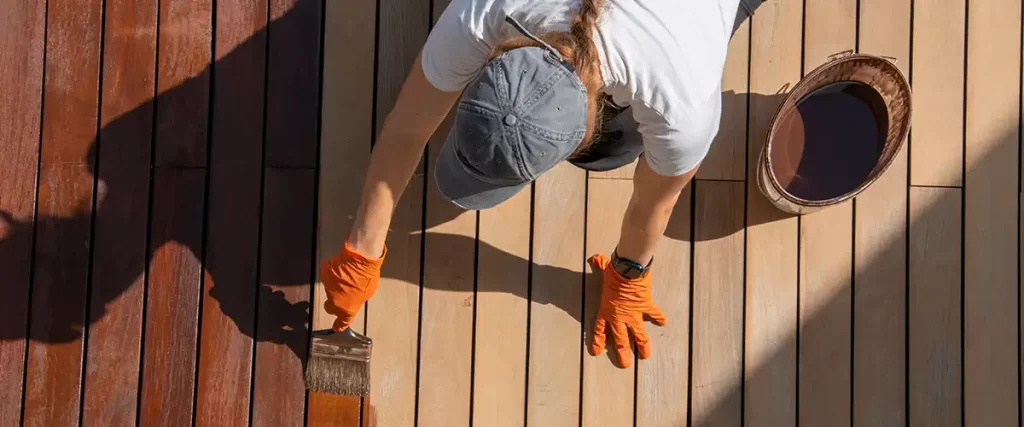
Start by stirring the stain thoroughly to mix any settled pigments. Apply a thin, even coat using a brush, roller, or sprayer. Work in the direction of the wood grain to help the stain penetrate evenly.
For most decks, two coats provide complete coverage and better protection. Let the first coat dry according to the manufacturer’s drying time before adding a second. Multiple coats ensure uniform color and longer-lasting results.
Don’t overload the brush or apply too thick a layer. Thick applications can lead to uneven drying and a tacky surface that attracts dust and debris.
After staining, wait at least 24 to 48 hours before walking on the deck, and longer before replacing furniture. The stain may feel dry to the touch, but it still needs time to cure fully.
Maintaining Your Deck Between Staining
A deck maintenance routine between stainings helps extend the life of your finish.
Sweep regularly to remove dirt and debris that can trap moisture. Clean spills quickly so they don’t stain the wood or break down the protective layer.
Trim back plants and bushes that touch the deck. Vegetation holds moisture against the wood and speeds up wear and mold growth.
Move furniture occasionally to prevent uneven fading and allow air circulation under heavy items.
Inspect the deck once or twice a year for early signs of wear. Catching problems early means a quicker fix and less work down the road.

Let Someone Else Handle the Work
Proper deck staining takes time, the right tools, and patience to let each step dry completely. If you’d rather skip the scrubbing, sanding, and multiple coats, New Direction Painting can handle the entire process for you.
We prep, clean, and apply deck stain that actually lasts. No shortcuts, no mess left behind. Your deck will look great and stay protected without you spending your weekend on your hands and knees with a brush.
Call us at (615) 673-5773 or message us here to get a quote. We’ll take care of your deck so you can just enjoy it.