
Interior and exterior paint are chemically different products designed for completely different environments, and swapping them can cause real problems.
We’re talking peeling walls, toxic fumes indoors, or a finish that deteriorates within a season.
So what actually separates these two products? And what happens when you ignore the distinction? Keep reading, because the answers might surprise you.
What Makes Interior and Exterior Paint Different
The difference between interior and exterior paint starts at the formula level.
Exterior paint is engineered to take a beating. It must handle rain, UV rays, temperature fluctuations, humidity, and mildew growth without cracking, fading, or peeling. To do that, manufacturers load it with flexible resins and additives like UV stabilizers and mildewcides.
Interior paint is built around a different priority: livability. It’s formulated to be low in volatile organic compounds, easy to clean, and capable of producing a smooth, visually appealing finish that holds up to scuffs and stains, not weather.
| Feature | Interior Paint | Exterior Paint |
| VOC levels | Low | Higher |
| UV resistance | Minimal | High |
| Flexibility | Rigid resins | Flexible resins |
| Mildew resistance | Limited | Strong |
| Finish durability | Scuff resistant | Weather resistant |
Why Exterior Paint Should Never Be Used Indoors
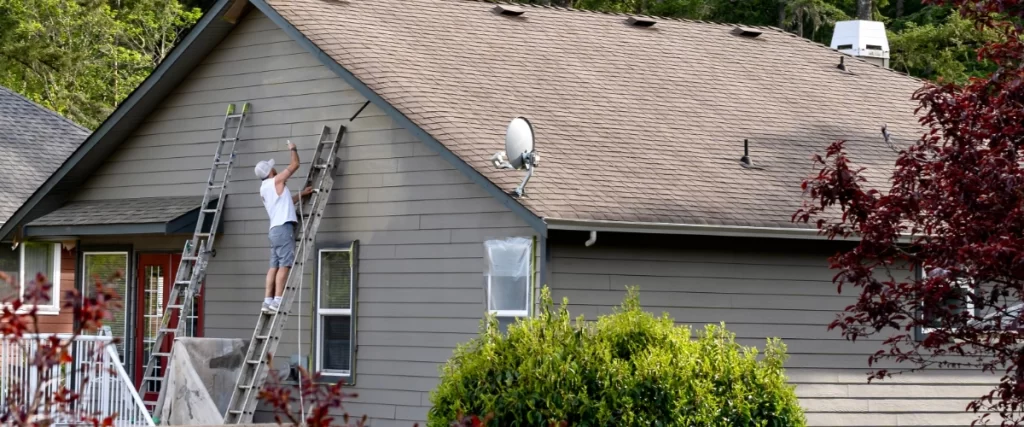
If you see that leftover exterior house paint you have lying around in the garage and think, “Hey, paint is paint,” you’d be making a big mistake.
Exterior paint contains additives (especially fungicides and UV stabilizers) that off-gas in enclosed spaces. The EPA has flagged high VOC exposure indoors as a contributor to poor indoor air quality, which can cause headaches, nausea, and long-term respiratory issues.
You can learn more about VOC risks and indoor air quality from the EPA’s indoor air resources.
Here are other things that can go wrong:
- The flexible resins in exterior paint are designed to expand and contract with temperature changes. Inside your home, that becomes a problem. The surface stays slightly tacky and scuffs easily.
- Exterior formulas aren’t optimized for the smooth finish you expect on interior walls, so the texture will look off.
- The fumes don’t just dissipate the way they would outdoors. They linger.
Bottom line: using exterior paint indoors poses real health risks and doesn’t even perform well. There’s no upside.
Why Interior Paint Fails Outside
Going the other direction is just as bad (or maybe worse) because the damage can appear almost immediately.
Most interior paints offer rigid resins that bond well to drywall and hold a clean finish. But rigid resins crack under the stress of outdoor conditions. When temperature changes stretch and contract the surface, interior paint can’t flex with it.
Rain is another issue. Interior paint can’t withstand moisture exposure. Instead, it absorbs water, bubbles, and peels. Within a single season of direct sunlight and rain, the surface will look as if it were never painted properly.
The “Can I Mix Them?” Question

Some homeowners wonder whether they can use a blend of interior and exterior paint to get the best of both worlds. Unfortunately, the answer is no.
The resins and additives in each formula are optimized separately. Mixing them creates an unpredictable result where neither the weather resistance nor the indoor finish quality comes through reliably.
For any painting project where you’re unsure which product to use, check the paint’s technical data sheet. Reputable manufacturers like Sherwin-Williams and Benjamin Moore publish detailed guidance on appropriate applications for each product line.
What About “Interior/Exterior” Paints?
You’ve probably seen cans labeled as interior and exterior paint. These do exist, but there are trade-offs.
They’re generally designed for low-stress applications (think trim work in a covered porch or a garage interior that sees some humidity).
So, they’re not a true replacement for a dedicated exterior formula on siding or a premium interior paint on main living areas.
Use them where the environment is genuinely in between. Otherwise, choose the right paint for the specific job.
Practical Tips Before You Start Painting

If you’re planning a painting project, run through this quick checklist:
- Identify whether the surface is fully exposed to outdoor elements or fully interior
- Check the product label for surface compatibility, not just indoor/outdoor designation
- Look at the VOC rating, especially for bedrooms or low-ventilation spaces
- Consider the finish: semi-gloss and gloss hold up better to moisture and frequent cleaning, in both interior and exterior applications
And if the surface straddles the line, like a sunroom or a covered outdoor kitchen, ask a professional before committing to a product.
Interior Paint vs Exterior Paint FAQs
Can I use exterior paint in my garage? Technically, yes, if the garage is detached and well-ventilated. But for an attached garage with access to the home’s interior, the higher VOC content in exterior paint can ruin indoor air quality. A durable interior paint formulated for concrete or a dedicated garage floor coating is usually the better call.
Does exterior paint last longer than interior paint? They’re built for different types of durability. Exterior paint is formulated to resist UV rays, moisture, and temperature changes. Interior paint resists scuffs, stains, and frequent cleaning. Each lasts a long time when used correctly on the right surface.
What happens if interior paint gets wet outside? It absorbs moisture, bubbles, and peels. Interior paint lacks the water-repelling additives in exterior formulas, so exposure to rain or even consistent humidity will degrade it quickly.
Is there a health risk from using exterior paint indoors? Yes. Exterior paint contains higher levels of VOCs and chemical additives that off-gas in enclosed spaces. Prolonged exposure can cause respiratory irritation and other health issues. The EPA specifically recommends ensuring proper ventilation and using low-VOC products for indoor use.
How do I know which paint to buy? Read the label and check the manufacturer’s data sheet. If the product is rated for exterior surfaces, keep it outside. For interior walls, look for low-VOC, washable formulas suited to the room’s specific demands.
Let Us Help
Choosing between interior and exterior paint, understanding the differences between interior and exterior paint formulas, matching products to surfaces, and managing VOC levels can be a lot to handle.
That’s exactly why most homeowners just call a professional instead of spending a weekend second-guessing themselves.
If you’re in the Tennessee area and want the job done right the first time, our team at New Direction Painting handles both interior and exterior projects with the right materials for every surface.
Save yourself the research. Call us at (615) 673-5773 or message us here.